
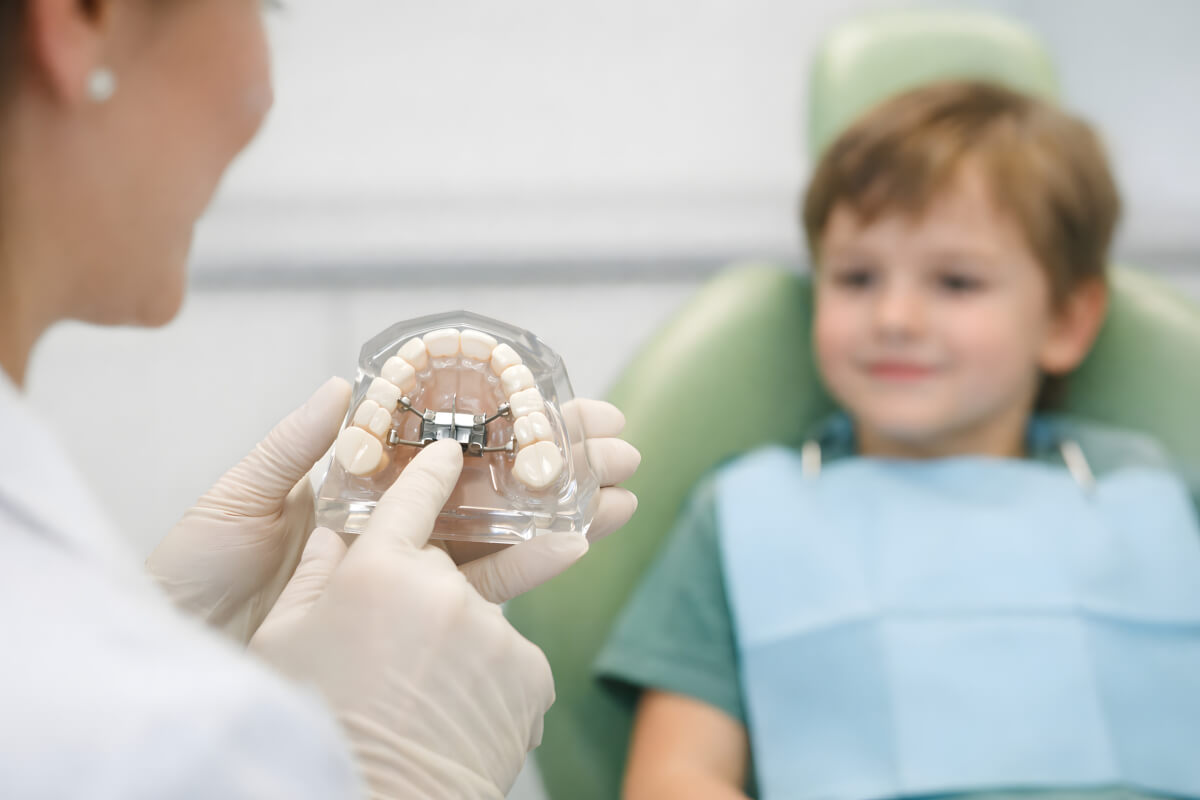
A palatal expander is an orthodontic appliance that widens the upper jaw while your child is still growing. Dr. Susan So recommends one when the upper jaw is too narrow for the teeth coming in or for the lower jaw to fit against. For many Castro Valley, Hayward and Fairview families, it’s the first appliance their child wears, so here are clear answers to the questions parents ask us most.
Quick Facts
| Item | Detail |
|---|---|
| What it does | Widens the upper jaw with gentle, steady pressure |
| Where it sits | Across the roof of the mouth, attached to the upper back teeth |
| Best age | While a child is still growing; timing depends on growth, not birth date |
| What it treats | Crossbites, crowding, blocked teeth, some breathing concerns |
| How it feels | Pressure or mild soreness for a few days after each adjustment |
| What comes next | A holding period, then braces or aligners if needed |
What Is a Palatal Expander?
A palatal expander is a custom-made appliance that sits across the roof of your child’s mouth and attaches to the upper back teeth. Each adjustment puts gentle pressure on the upper molars, gradually widening the upper jaw.
In children, the two halves of the upper jaw meet at a seam that hasn’t fused yet. Steady pressure eases that seam apart, and new bone fills the space. That’s why expanders work so well during childhood and the early teen years.
Some expanders widen through a small screw that you turn with a special key. Others use built-in springs or wires and need no turning at home.
Who Needs a Palatal Expander?
Kids need an expander when the upper jaw is too narrow for their teeth or their bite. Not every child needs one, and Dr. So only recommends it when the exam shows a clear reason.
The most common reasons include:
- Crossbite: the upper back teeth close inside the lower teeth instead of outside them.
- Crowding: a narrow upper jaw leaves too little room for permanent teeth.
- Blocked teeth: a permanent tooth can’t find room to come in.
- Breathing concerns: widening the upper jaw also widens the floor of the nose, which can help airflow for some children.
Treating these early can, in some cases, help a child avoid pulled teeth or more involved treatment later. Read more about Phase 1 orthodontic treatment to see where an expander fits in.
What Age Is Best for a Palatal Expander?
The best time is while your child is still growing, and we can often spot a narrow upper jaw by age 6 or 7. The American Association of Orthodontists recommends a first orthodontic check by age 7, which gives us time to plan.
Growth matters more than age. Girls tend to finish growing sooner than boys, so the ideal window can differ between siblings. Dr. So reviews X-rays, photos and a 3D iTero scan to judge where your child is in growth.
Can adults get expansion? Some can, but the options differ because the jaw has stopped growing. Dr. So can explain what’s possible at a consultation.
Does a Palatal Expander Hurt?
Most kids describe pressure or mild soreness, not sharp pain. The feeling shows up in the first few days and after each adjustment, then fades as the mouth adapts.
Some children notice a “full” feeling in the mouth or pressure near the nose or cheeks. Soft foods help during the first days. If discomfort feels severe or doesn’t improve, call our office at (510) 537-4900.
What Should You Expect During Treatment?
An expander works in a few clear steps, and our team walks you through each one.
- Exam and plan. Dr. So confirms the upper jaw is narrow and chooses the right expander.
- Custom fit. We custom-fit the expander to your child’s mouth and attach it to the upper back teeth.
- Widening. The expander widens the jaw in small steps. If it uses a key, our team shows you how to turn it before you leave.
- Check-ups. We see your child regularly to track progress and keep teeth and gums healthy.
- Holding period. Once the jaw reaches the right width, the expander stays in place for a while so the new bone can settle.
- Next steps. Some children need braces or aligners later; others don’t.
Why Is There a Gap Between My Child’s Front Teeth?
A small gap between the two upper front teeth is a normal sign that the expander is working. It shows the upper jaw is widening, and it often closes over the following months as the teeth shift.
Many parents find the gap surprising, so we mention it before treatment starts. It doesn’t mean anything has gone wrong.
Will an Expander Affect Speech and Eating?
Yes, briefly. The tongue needs time to adjust, so many kids talk with a slight lisp and make extra saliva for the first few days. Reading aloud and normal conversation help the tongue adapt faster.
For eating, start with soft foods. Skip hard, sticky and chewy foods, which can damage the appliance. Our list of soft, braces-friendly snack ideas works well for expanders too.
Which Type of Expander Will Your Child Need?
Dr. So chooses the type based on your child’s bite and age. The two main styles differ in whether they come out.
| Feature | Fixed expander | Removable expander |
|---|---|---|
| Stays in the mouth | All the time | Comes out for eating and cleaning |
| How it widens | Turned with a key at home or adjusted at visits, or built-in springs | Adjusted on a schedule set by your orthodontist |
| Best for | Most crossbites and narrow upper jaws | Smaller amounts of widening |
| Depends on wearing it | No | Yes, it only works while worn |
How Do You Keep an Expander Clean?
Brush carefully around the expander after meals, since food can get trapped under it. A water flosser helps rinse out tricky spots, and regular check-ups let us keep the gums healthy.
Frequently Asked Questions
Does a palatal expander hurt?
Most kids feel pressure or mild soreness for a few days after placement and after adjustments, not sharp pain.
Why is there a gap between the front teeth?
The gap shows the upper jaw is widening. It’s normal and often closes over the following months.
Will an expander change my child’s speech?
Only for a short time. Most kids adjust as the tongue gets used to the appliance.
How do you turn an expander?
If your child’s expander uses a key, our team shows you how to turn it at the placement visit and gives you a schedule.
Can adults get a palatal expander?
Some adults can, but the options differ from those for growing kids. Dr. So can explain what fits your jaw.
Ready for Your Child’s First Visit?
The best way to know if your child needs an expander is an exam with a board-certified orthodontist. Meet Dr. Susan So at our office at 20406 Redwood Rd. in Castro Valley. Call or text (510) 537-4900, or request your free consult online. Learn more about palatal expanders and two-phase treatment, how long treatment takes for kids and, for later, which type of braces is right for you.